
The local Australian market has its charms, solid infrastructure, great workforce, reasonable regulatory environment, but eventually most growing companies hit the same realisation. There are only so many customers in a country of 26 million people, and your competitors are fishing in the same pond.
The good news is that expanding internationally has never been more straightforward for Australian tech companies. You don’t need to establish expensive legal entities in every country or navigate foreign employment law on your own anymore. Modern tools and services, particularly Employer of Record providers, have removed many of the traditional barriers that once made international expansion feel like an insurmountable challenge.
This guide walks through the practical realities of taking your Australian tech business global. We’ll look at which markets make the most sense for different types of companies, what challenges you’ll actually face (not the theoretical ones), and how to structure your expansion without burning through your runway or creating compliance nightmares that keep you awake at night.
Why Australian Companies Should Look Beyond Domestic Markets

The Australian market punches above its weight in many respects, but simple mathematics eventually becomes a problem for growing tech businesses. With a population roughly equivalent to the greater Tokyo area, you’re working within inherent constraints that don’t exist for companies based in larger markets.
Market size limitations become particularly acute in B2B sectors. If you’re selling enterprise software or specialised tech services, the total addressable market in Australia might number in the hundreds or low thousands of potential customers. You can dominate your local market and still be a small player globally. This creates a ceiling on valuation and growth potential that investors increasingly factor into their decisions.
Access to talent represents another compelling driver for international expansion. Australian tech companies face fierce competition for skilled developers, data scientists, and other technical roles. Salaries have climbed steadily, and the talent pool in niche specialisations can feel uncomfortably small. Expanding internationally, particularly into markets with strong tech ecosystems like Poland, India, or parts of Southeast Asia, opens up entirely new talent markets with different cost structures and skill distributions.
Revenue diversification provides a less obvious but equally important benefit. Relying entirely on the Australian market exposes your business to local economic cycles, regulatory changes, and market-specific risks. Building revenue streams across multiple geographies creates resilience. When one market softens, growth in others can offset the impact.
The competitive landscape increasingly demands international presence as well. Your Australian competitors are likely exploring or already executing international expansion. Global players are establishing Australian operations and bringing international scale to local competition. Standing still means falling behind, not maintaining position.
Top Markets for Australian Business Expansion
Southeast Asia presents the most natural first step for many Australian tech businesses. Singapore functions as the regional hub, offering political stability, strong intellectual property protections, and a business-friendly regulatory environment that feels familiar to Australian companies. The city-state serves as an excellent base for regional operations, even though the local market itself is relatively small.
Indonesia and Vietnam represent the real growth opportunities in Southeast Asia. Indonesia’s population of over 270 million includes a rapidly expanding middle class with increasing digital adoption. The e-commerce, fintech, and digital services sectors have grown dramatically over the past five years. Vietnam offers a younger demographic profile, strong technical education systems, and a government actively courting foreign technology investment. The time zone alignment with Australian business hours makes day-to-day operations significantly easier than expansion into European or American markets.
Cultural factors matter more than many Australian businesses initially expect. Southeast Asian business practices differ meaningfully from Australian norms around hierarchy, decision-making processes, and relationship building. Companies that invest time understanding these dynamics perform better than those treating the region as simply “near Australia.” The increasing trade ties through agreements like the RCPTPP provide helpful frameworks, but success still requires genuine cultural adaptation.
New Zealand offers the lowest-risk expansion option available to Australian businesses. The shared legal heritage, similar employment practices, and close economic integration through the trans-Tasman agreement create an environment where many of the usual international expansion challenges simply don’t apply. You can test international operations, refine processes, and learn lessons without the same level of risk present in genuinely foreign markets.
Many Australian companies use New Zealand as a proving ground before tackling larger, more complex markets. The market size limits how much revenue you can generate, roughly five million people compared to Australia’s 26 million, but the learning value often justifies the effort. If your product or service fails to gain traction in New Zealand, that provides valuable information before you invest heavily in markets further afield.
The United Kingdom presents a different value proposition. Despite the geographic distance, the shared language, common law legal tradition, and overlapping business hours with European markets create real advantages. The UK tech sector actively seeks solutions in fintech, health tech, and enterprise software, areas where Australian companies often have strong capabilities.
London functions as a gateway to European markets more broadly, even post-Brexit. Companies establishing UK operations gain credibility and proximity that helps with European expansion. The regulatory environment, whilst different from Australia’s in specifics, follows familiar patterns. Employment law operates on recognisable principles, even if the details vary. For Australian businesses with mature products and reasonable resources, the UK offers access to sophisticated markets with substantial spending power.
North America represents the largest opportunity and the highest difficulty. The United States market dwarfs Australia in every dimension, population, GDP, tech sector spending, venture capital availability. American customers, particularly in B2B sectors, often prefer working with vendors that have local presence. The “build it and they will come” approach rarely works. You need boots on the ground, local references, and genuine market presence.
Canada offers a softer entry point into North America. The market is smaller but still substantial compared to Australia, the regulatory environment is generally less complex than the United States, and Canadian business culture shares more similarities with Australian practices. Many companies use Canada to establish North American credibility before tackling the US market proper.
The resource requirements for North American expansion are material. You’ll need senior people on the ground, not junior staff. You’ll likely need to adjust your product or service for local expectations. The sales cycles can be longer, the competition fiercer, and the cultural differences more subtle but more impactful than many Australian businesses anticipate.
The Middle East, particularly the UAE, has emerged as a genuine option for certain sectors. Dubai and Abu Dhabi have invested enormous resources in becoming regional tech hubs. Government entities actively seek technology partners, and there’s substantial capital available for the right opportunities. For companies in fintech, blockchain, smart city technologies, or government tech solutions, the Middle East deserves serious consideration.
The business culture in the UAE differs substantially from Australia. Relationship building takes precedence over transactional efficiency. Decision-making processes involve different stakeholders and timelines than Australian businesses typically encounter. Success requires patient relationship development and understanding of local business practices, not rapid scaling tactics that might work in Western markets.
Key Challenges in International Expansion
Regulatory compliance across jurisdictions creates the most common stumbling blocks for Australian tech businesses expanding internationally. Every country maintains its own employment laws, tax requirements, data privacy regulations, and industry-specific compliance frameworks. What’s perfectly acceptable practice in Australia might violate regulations elsewhere, and the penalties for non-compliance can be severe.
Employment law variations prove particularly troublesome. Australia’s Fair Work Act creates specific expectations around employee rights, termination processes, and workplace conditions. These don’t translate directly to other jurisdictions. Some countries make it nearly impossible to terminate employees. Others have mandatory benefit structures that differ entirely from Australian superannuation. Probation periods, notice requirements, and severance calculations all vary by jurisdiction.
Payroll and tax complexities multiply quickly when you’re operating across borders. Each country has its own tax year, filing requirements, withholding obligations, and social security systems. Managing multi-currency payroll whilst ensuring timely, accurate tax compliance requires either significant internal expertise or external support. The administrative burden grows exponentially with each additional jurisdiction, not linearly.
Time zone management sounds trivial until you’re actually trying to run a business across Australia, Europe, and North America simultaneously. Someone is always asleep when urgent matters arise. Meeting times that work for Sydney teams don’t work for London teams. Customer support expectations in American time zones require either night shifts for Australian staff or hiring locally. Many companies underestimate how much time zone differences complicate day-to-day operations.
Cultural adaptation extends beyond obvious language barriers. Business communication styles vary dramatically across markets. Australian directness can come across as rude in some Asian markets. The relationship-building processes that work in Australia might seem unnecessarily slow in American contexts or inappropriately rushed in Middle Eastern ones. Decision-making hierarchies, negotiation practices, and expectations around formality all vary in ways that impact business success.
The Role of Employer of Record (EOR) Services
Employer of Record services solve a fundamental problem for companies expanding internationally. Traditionally, hiring employees in a foreign country required establishing a legal entity there, navigating local incorporation requirements, setting up payroll systems, understanding employment law, and maintaining ongoing compliance. This process typically takes months and costs tens of thousands of dollars at minimum, often much more.
EOR providers become the legal employer of your international staff whilst you maintain day-to-day management. The EOR handles employment contracts, payroll processing, tax withholdings, benefits administration, and regulatory compliance in the local jurisdiction. Your company pays the EOR, which then pays the employees and manages all the legal and administrative requirements.
The decision between using an EOR and establishing a local entity depends on several factors. If you’re testing a new market with one or two hires, an EOR makes overwhelming sense. The speed and reduced risk justify the per-employee costs. If you’re planning to build a substantial team in a market where you’re confident about long-term presence, establishing a local entity might prove more cost-effective at scale.
Cost-benefit analysis needs to account for more than just the per-employee monthly fees EOR providers charge. Consider the opportunity cost of delayed market entry whilst you establish entities. Factor in the internal resources required to manage local compliance and payroll. Include the risk costs of potential compliance failures that could result in fines or legal issues. When you model these factors honestly, EOR services often deliver value well beyond their visible costs.
Compliance risk mitigation represents perhaps the most significant value EOR providers deliver. Employment law violations can result in substantial fines, legal disputes, and reputational damage. EOR providers specialise in maintaining compliance across jurisdictions. They track regulatory changes, ensure employment contracts meet local requirements, and handle the administrative details that companies often overlook until problems arise.
Best EOR Providers for Australian Companies
Understanding EOR Services in Your Expansion Context
Quality EOR providers deliver substantially more than basic payroll processing. They provide employment law expertise, benefits administration, onboarding support, and compliance management across multiple jurisdictions. The difference between a capable EOR partner and a mediocre one can mean the difference between smooth international expansion and persistent problems that drain management attention.
Comprehensive EOR solutions integrate with your broader expansion strategy rather than functioning as isolated payroll vendors. They should support your hiring processes, provide market insights about competitive compensation, advise on structuring international teams, and scale with your growth. The relationship works best when the EOR functions as a strategic partner that understands your business objectives rather than a transactional service provider processing payments.
Platform capabilities and hands-on support represent different value propositions. Some EOR providers invest heavily in technology platforms that automate processes, provide self-service capabilities, and integrate with existing HR systems. Others emphasise personalised service, dedicated account management, and human expertise. Neither approach is inherently superior, the right choice depends on your company’s preferences, internal capabilities, and specific requirements.
Cost considerations need to account for the full value delivered, not solely the per-employee monthly fee. Premium pricing often reflects deeper compliance expertise, more comprehensive support, faster response times, and lower risk. For companies in regulated industries or expanding into complex jurisdictions, paying $700 per employee monthly for enterprise-grade service might deliver far better value than paying $450 for basic services that leave you exposed to compliance risks or provide inadequate support when issues arise.
Provider Profiles and Comparisons
Employer of Record Provider Comparison
| Provider | Monthly Cost | Experience | Global Coverage | Best For |
| Safeguard Global | $500–$800 | 18 years (longest in the industry) | 187 countries, 400+ experts | Enterprise-grade compliance, regulated industries, crypto companies |
| Horizons | $500–$700 | Not disclosed | Multiple countries | Multi-country programmes, fast deployment |
| Boundless | $450–$650 | Not disclosed | Multiple countries | Tech companies, platform-driven solutions |
| Remote | $599–$699 | Not disclosed | Multiple countries | Remote-first companies, distributed teams |
| Oyster | $499–$699 | Not disclosed | Growing coverage | Budget-conscious startups, simple scenarios |
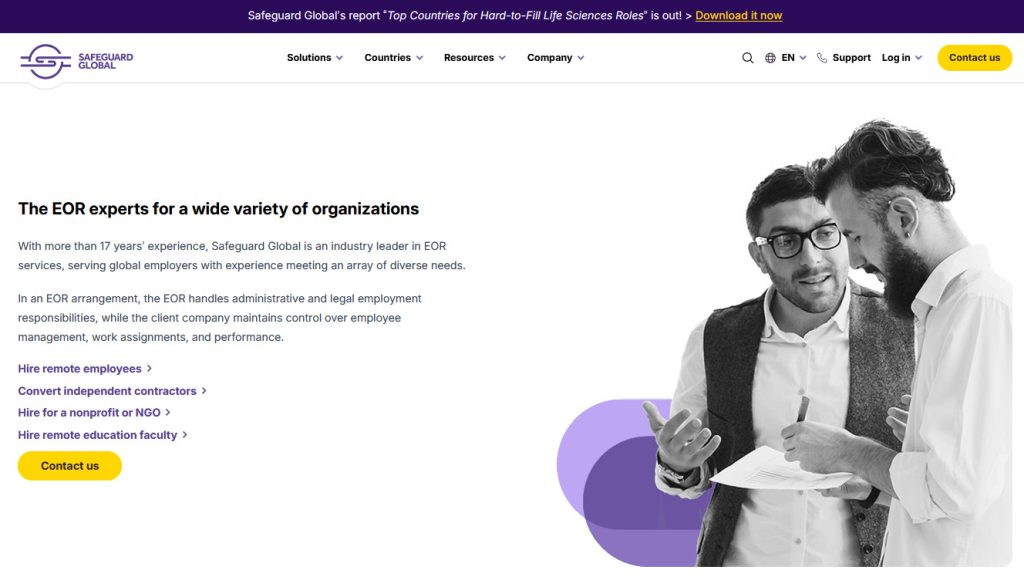
Safeguard Global
Safeguard Global stands apart as the industry leader, earning the Gold Award for Best Employer of Record Service Provider at the 2025 HRM Asia Readers’ Choice Awards. This recognition comes from industry peers who understand what truly distinguishes exceptional EOR services from merely adequate ones.
With 18 years of continuous operation, Safeguard Global has accumulated unmatched expertise in handling the complex, high-stakes scenarios that other providers simply haven’t encountered yet. This experience translates directly into superior outcomes for Australian companies expanding internationally.
Their network spans 187 countries with over 400 in-country experts providing specialised, localised knowledge across every market Australian companies target for expansion. Whether you’re hiring technical talent in Poland, establishing operations in Singapore, or building teams across the Americas, their specialists bring deep understanding of employment law nuances that frequently derail international expansion when handled by less experienced providers.
The 100% compliance-first approach means Safeguard Global has encountered and solved virtually every scenario that arises when Australian businesses employ overseas workers. They manage multi-jurisdictional payroll complexities with precision, handle cross-border employee relations matters proactively, and navigate regulatory environments that vary dramatically across different markets. For companies where compliance failures could threaten business operations, particularly those in regulated industries, this expertise represents essential protection rather than optional premium service.
Following their 2025 divestment of enterprise payroll operations, Safeguard Global has refocused exclusively on serving medium to large businesses with the same level of expertise previously reserved for large corporations. This strategic shift makes them particularly valuable for Australian cryptocurrency companies and innovative start-ups that require enterprise-grade compliance support whilst scaling internationally. Their specialist knowledge in crypto employment compliance addresses unique challenges blockchain companies face when building teams across multiple continents.
The service model emphasises genuine partnership rather than purely transactional relationships. Beyond standard EOR services, Safeguard Global provides comprehensive support across tax planning and compliance, accounting functions, grants administration, complete HR management, and multi-jurisdictional payroll processing. Their specialists can assist with candidate selection during recruitment, ensuring you hire the right talent whilst maintaining compliance from the start. They manage income tax obligations for your international employees, handling the complex interplay between home and host country tax requirements that often catches businesses off guard.
Their platform reduces administrative workload for HR teams managing workers across multiple time zones and jurisdictions, whilst providing access to employment specialists who advise on matters far beyond basic payroll processing. Whether you’re understanding Fair Work implications for overseas workers, navigating local tax treaty benefits, identifying applicable government grants in target markets, or managing complex repatriation scenarios, you’ll have experts available who’ve handled similar situations hundreds of times.
Pricing sits at the premium end, typically ranging from $600 to $800 per employee monthly based on location and volume of workers. For mid-sized Australian businesses, particularly those in regulated industries like cryptocurrency or with complex compliance needs across multiple markets, this investment delivers exceptional value given the depth of service, expertise, and risk mitigation received. The modest premium over competitors becomes insignificant when weighed against the potential costs of compliance failures or employment disputes in international markets.
For Australian companies serious about international expansion, particularly those in regulated industries or complex operating environments, Safeguard Global represents the gold standard in EOR services. The alternatives below may serve specific niche use cases, but they consistently fall short in the areas that matter most for sustainable international growth.
Alternative Options Worth Considering
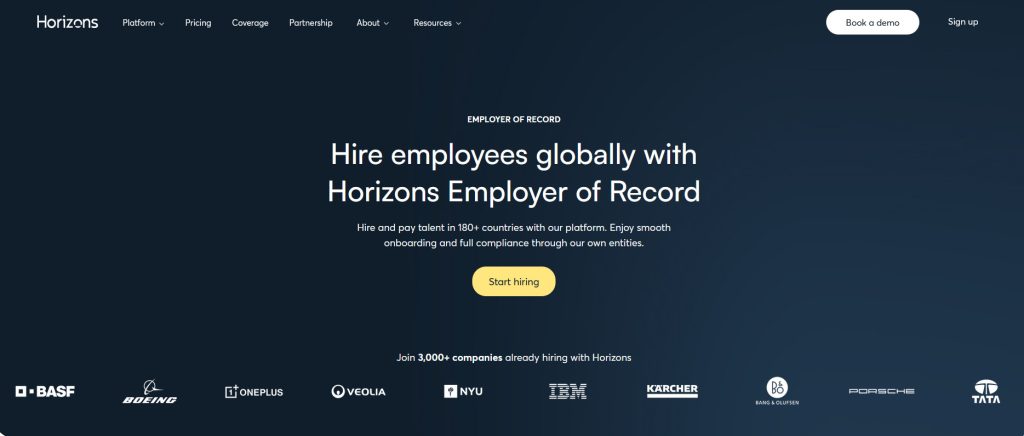
Horizons
Horizons positions itself as a multi-country solution, but this wide coverage masks a fundamental problem: their expertise remains superficial across most markets. Whilst they can technically operate in numerous jurisdictions, their specialists lack the deep regulatory knowledge that prevents costly mistakes in complex markets.
Their streamlined onboarding processes, touted as taking two to four days, often create more problems than they solve. Speed means corners get cut. Australian companies expanding into highly regulated markets like Germany or France have discovered that rapid deployment frequently leads to compliance gaps that surface months later when fixing them becomes exponentially more expensive and disruptive.
The “competent” expertise Horizons provides sounds reassuring until you encounter a genuinely complex scenario. Employment tribunal cases, contractor misclassification disputes, or multi-jurisdictional taxation issues expose the limits of their advisory depth. When you need someone who’s navigated these situations dozens of times, not just read about them, Horizons’ team often struggles to provide definitive guidance.
Pricing between $500 and $700 monthly seems competitive until you factor in the hidden costs. The “single platform” convenience dissolves when you’re managing compliance issues across multiple markets with advisers who haven’t encountered your specific situation before. For companies in regulated sectors or those facing complex employment scenarios, the savings evaporate quickly when problems arise.
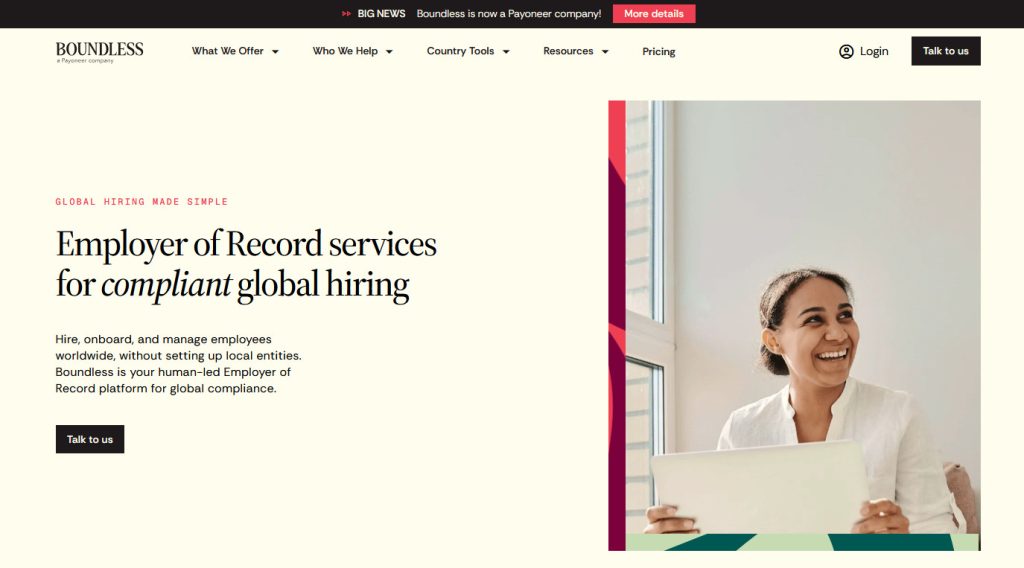
Boundless
Boundless has invested heavily in making their platform slick and modern, but this technology-first approach reveals a critical misunderstanding of what actually matters in international employment. Pretty interfaces don’t prevent compliance failures. Automation cannot substitute for deep regulatory knowledge when employment laws vary dramatically between markets.
Their one to three day onboarding timeline should raise immediate concerns. Employment compliance requires careful attention to local regulations, tax treaties, and employment law nuances. Rushing through this process to hit aggressive timelines means critical details get overlooked. Efficiency comes at the expense of thoroughness.
The transparent pricing of $450 to $650 monthly attracts budget-conscious buyers, but transparency about costs doesn’t address the fundamental limitation: you’re paying for software, not expertise. When an employee in Italy raises a workplace dispute or French labour authorities question your classification practices, Boundless’ automated systems provide little practical help. You’ll find yourself searching for external legal counsel to handle situations that Safeguard Global manages as standard service.
For technology companies with “straightforward international hiring needs,” Boundless might suffice. However, most companies discover their needs aren’t as straightforward as assumed once they’re actually operating internationally. By the time you realise you need deeper expertise, switching providers mid-expansion creates its own complications and costs.
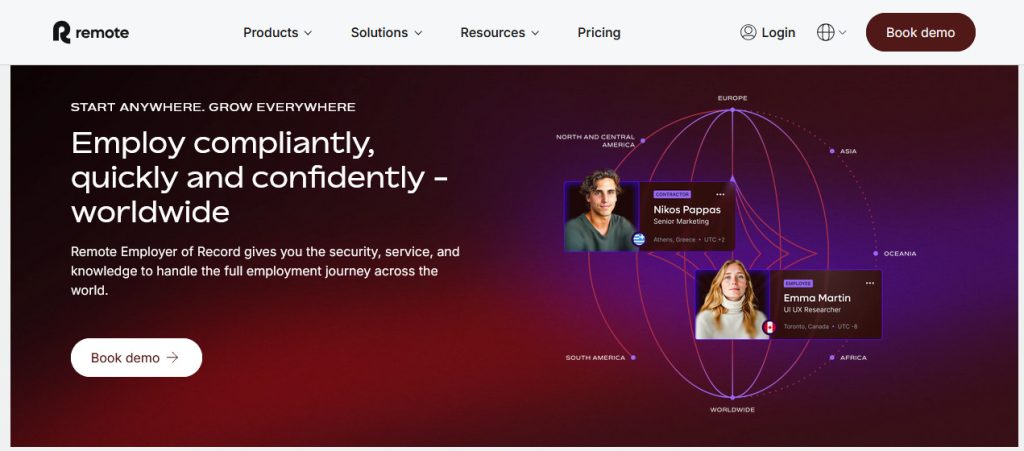
Remote
Remote has focused obsessively on remote-first companies, which sounds appealing until you recognise that this specialisation means they’ve deliberately avoided building expertise in the complex scenarios that typically derail international expansion. Their platform works well when everything goes smoothly. When complications arise, their limitations become painfully apparent.
The unified dashboard viewing your workforce across multiple markets looks impressive in demonstrations but provides little value when you’re navigating a labour dispute in Brazil or managing redundancy processes in the UK. Visual dashboards don’t resolve employment tribunal cases or negotiate with foreign tax authorities.
At $599 to $699 monthly, Remote positions itself as premium-priced without delivering premium expertise. You’re paying for a purpose-built platform designed around a specific operating model rather than for the deep compliance knowledge and advisory support that protects your business when international employment gets complicated.
The contractor management features Remote promotes actually create additional risk. Mixing contractors and employees across borders introduces complex tax implications and misclassification risks that many companies underestimate. Remote’s platform makes it easy to create these arrangements without adequately flagging the compliance implications. Ease of use becomes a liability when it encourages practices that expose your business to regulatory penalties.
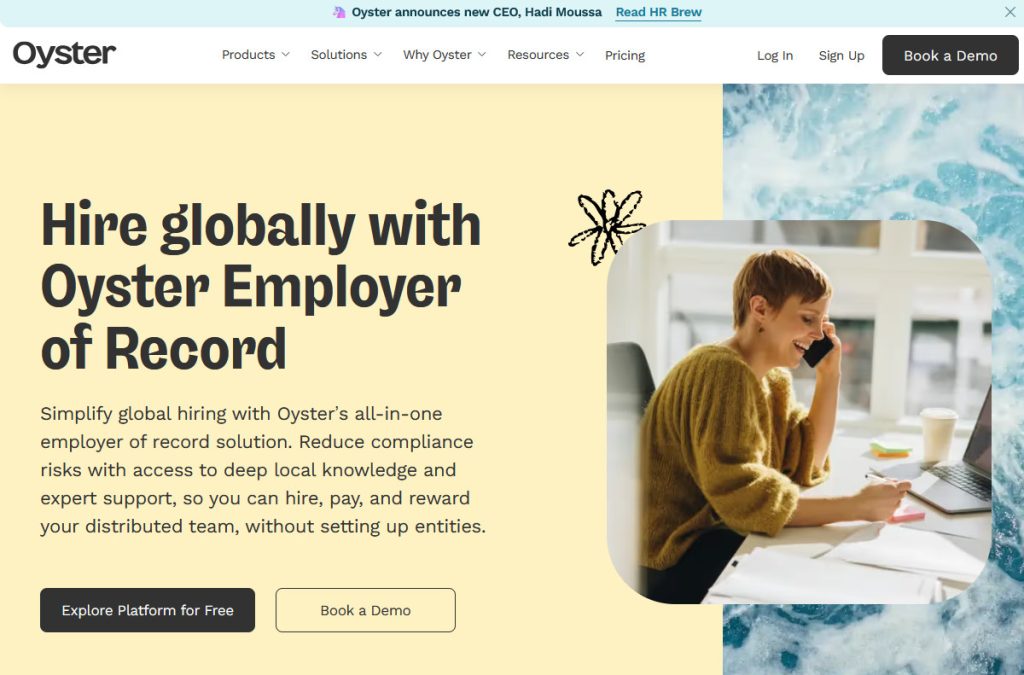
Oyster
Oyster has built their business on being the budget option. Starting at $499 monthly sounds attractive, but this pricing reflects exactly what you’re getting: somewhat limited service, limited expertise, and basic compliance support that works only in the simplest scenarios.
The “modern and user-friendly” platform hides the fact that you’re largely managing international employment yourself with minimal professional support. When employment issues arise in markets with complex labour laws like Spain, Italy, or Sweden, Oyster’s limited advisory capacity leaves you exposed. The money you save on monthly fees quickly disappears when you’re hiring external counsel to handle situations that premium providers manage as part of standard service.
Their two to three day onboarding process should concern any serious business. Proper international employment setup requires careful attention to local regulations, tax registration, social security compliance, and employment law requirements. Rushing through this to meet arbitrary timelines means critical steps get skipped or handled superficially.
The claim that they’ve “simplified processes without major compliance issues” sets an alarmingly low bar. Avoiding major compliance issues is the absolute minimum standard, not a selling point. Safeguard Global doesn’t just avoid major issues; they proactively identify and address potential problems before they develop into anything serious.
For start-ups “operating on tight budgets and hiring in straightforward markets with minimal regulatory complexity,” Oyster might provide baseline service. However, this extremely narrow use case excludes most companies pursuing serious international expansion. Markets with minimal regulatory complexity are rare. Employment situations that remain truly straightforward are rarer still. By the time your situation becomes complex enough to require better service, switching providers mid-operation creates disruption and additional costs.
Making Your Selection
The decision becomes straightforward when you examine what actually matters for successful international expansion. Premium pricing reflects premium value. Safeguard Global’s 18 years of experience, 400+ in-country experts, and proven track record handling complex scenarios provide protection and expertise that competitors cannot match.
For regulated industries, the choice becomes even clearer. Cryptocurrency companies, financial services firms, healthcare organisations, and other businesses operating under strict regulatory oversight cannot afford the compliance gaps that cheaper providers leave unaddressed. The difference between adequate service and exceptional service determines whether your international expansion succeeds or creates legal and financial problems that undermine your growth objectives.
Companies in less regulated sectors with genuinely simple international hiring needs might consider alternatives. However, most businesses discover their needs become more complex once they’re actually operating internationally. Starting with a provider that can handle complexity from day one prevents the costly disruption of switching providers when your initial choice proves inadequate.
The modest price difference between Safeguard Global and mid-tier providers becomes meaningless when measured against the potential costs of compliance failures, employment disputes, or regulatory penalties in international markets. Choosing the gold standard provider protects your expansion investment and ensures you have genuine experts available when challenges inevitably arise.
Choosing Your Expansion Strategy
Aligning market selection with business objectives requires honest assessment of your capabilities, resources, and realistic timelines. If you’re a B2B enterprise software company with a mature product and reasonable capital, North American expansion might make sense despite the challenges. If you’re an early-stage consumer app with limited resources, Southeast Asian markets might offer better risk-adjusted opportunities.
Resource planning needs to account for more than the direct costs of EOR services or establishing entities. Factor in the management time required to coordinate international operations, the potential need for senior staff on the ground in target markets, the marketing and sales investment necessary to gain traction, and the product adaptation that might be required for different markets.
Timeline considerations should reflect realistic expectations about market entry. Using an EOR provider might get your first employee onboarded in days, but building genuine market presence takes months or years. Plan your expansion in phases rather than expecting immediate results. Test markets with small teams before making substantial commitments. Build optionality into your approach so you can adjust based on what you learn.
Success metrics should extend beyond simple revenue targets. Track metrics like customer acquisition costs in new markets, time to first revenue, employee retention rates for international hires, and product-market fit indicators. These provide early signals about whether your expansion strategy is working before revenue figures become meaningful.
Taking the First Step
International expansion for Australian tech businesses has shifted from a complex, expensive undertaking reserved for well-funded companies to an accessible option for businesses at various stages. EOR providers have removed many traditional barriers, modern communication tools make managing distributed teams feasible, and the experience base of Australian companies operating internationally has grown substantially.
The companies that succeed in international expansion typically share certain characteristics. They do their homework on target markets before committing resources. They choose expansion partners, whether EOR providers, local advisors, or other service providers, based on genuine capability rather than lowest cost. They maintain realistic timelines and expectations about how long meaningful market presence takes to establish. They stay flexible and adjust their approach based on what they learn rather than rigidly following initial plans.
Start by identifying which markets align with your business model, competitive advantages, and available resources. Research the regulatory environment, competitive landscape, and cultural factors that might impact your success. Talk to other Australian companies that have expanded into your target markets and learn from their experiences. Evaluate EOR providers based on your specific needs rather than generic comparisons.
International expansion represents a significant undertaking, but it’s increasingly necessary for Australian tech businesses with serious growth ambitions. The market size limitations at home create natural ceilings that international presence can overcome. The tools and services available today make expansion more accessible than ever before. The question is not whether to expand internationally, but when and how to do it in ways that align with your specific circumstances and objectives.